Asphalt Crack Filling in Tampa Bay.
Cracks are the fastest and cheapest thing to fix on a lot. The moment they let water into the base, a small line becomes a pothole. Hot rubberized sealant poured while the pavement is still sound is the highest return maintenance step on commercial asphalt.
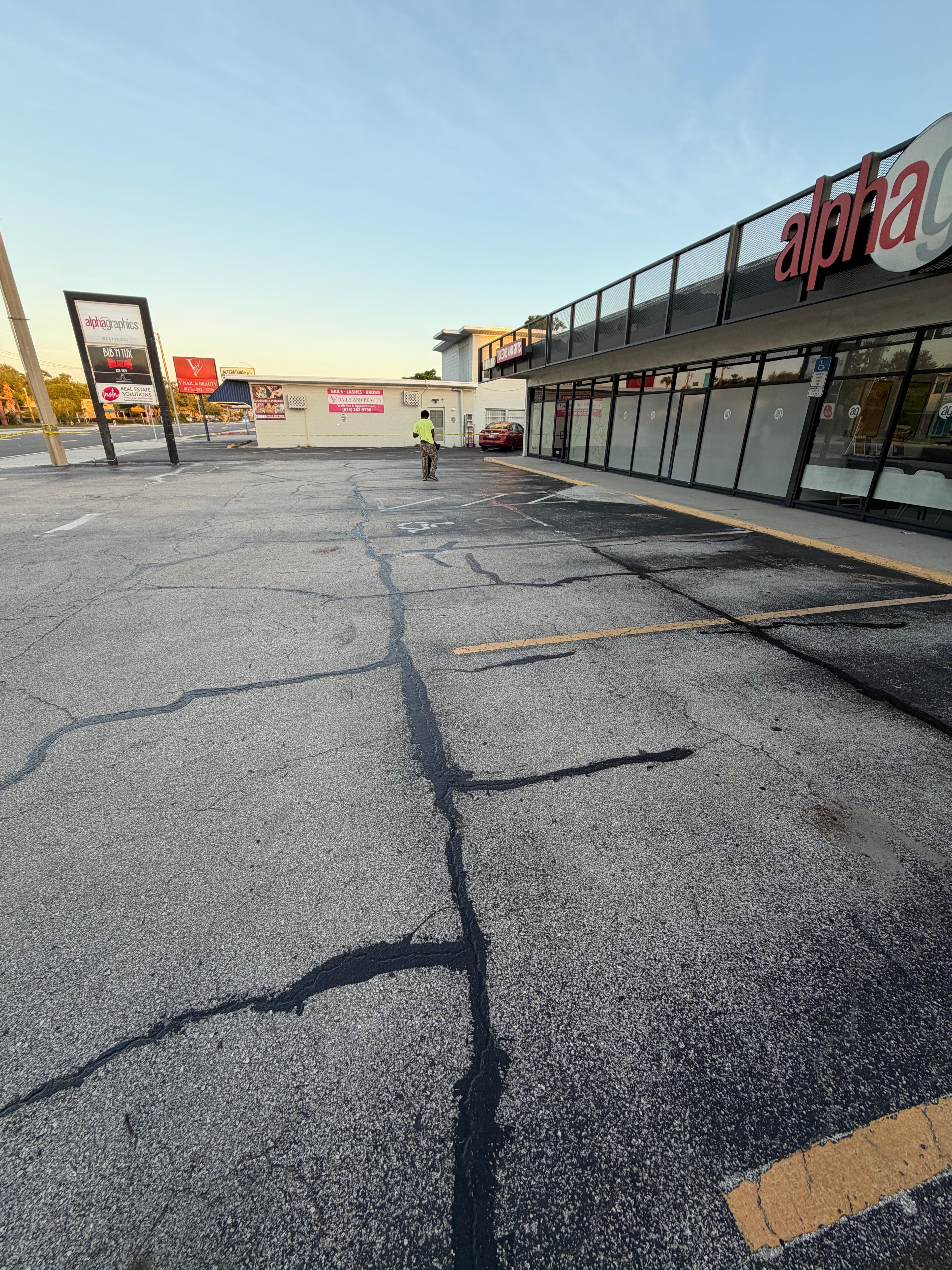
Crack filling keeps small lines from becoming big repairs.
Crack filling is the process of cleaning out existing asphalt cracks and pouring a hot, flexible, rubberized sealant into them. The sealant bonds to the crack walls, flexes with the pavement, and blocks water from reaching the base layer underneath.
Base damage is what makes pavement repair expensive. Once water gets through a crack and starts carrying fines out from under the surface, the base goes soft and the surface above it fails. That is the moment a hairline crack turns into a pothole.
Not every crack is a candidate for fill. Alligatored sections (small connected cracks over an area) signal a base failure, and those get patched, not filled. We flag the difference during the site walk.
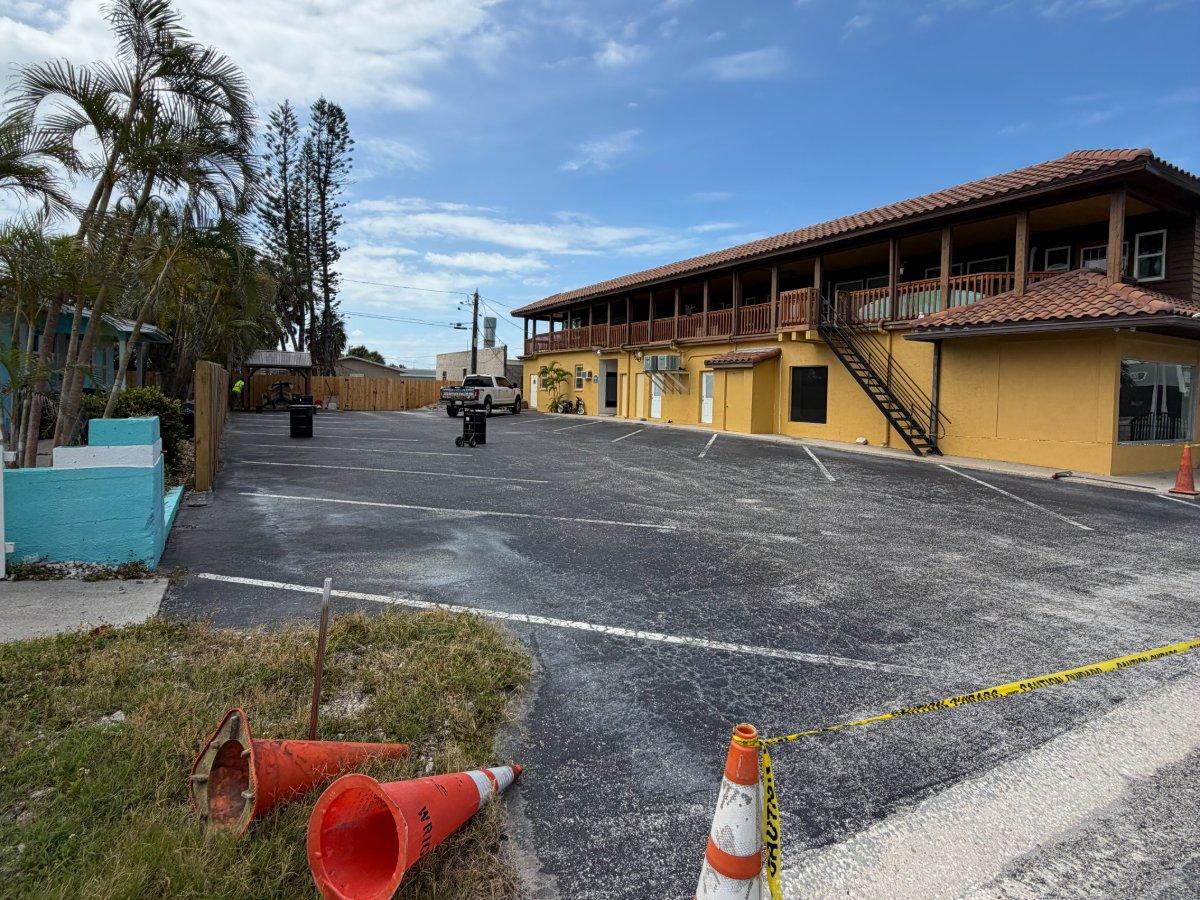
UV, heat, and rain are what break pavement here.
UV breaks the top layer into pieces
Florida sun degrades the asphalt binder from the top down. As the binder weakens, the top layer breaks into smaller and smaller pieces, each of which becomes a future crack.
Daily heat cycles widen cracks
Thermal expansion and contraction opens cracks a little wider each year. A hairline this spring is a quarter inch by next spring in a lot that stays unfilled.
Rain is what actually breaks things
Tampa Bay sees heavy rain concentrated in short windows. Every open crack is a funnel. Fill the cracks and the water runs off instead of in.
How the job runs, start to finish.
One point of contact, clear scope, phased work so the lot stays usable where possible.
Walk and map
Identify cracks over about a quarter inch wide and any alligatored sections (which get patch, not fill). We photograph and mark everything before work starts.
Clean cracks
Blow out dirt, sand, and vegetation with high pressure air. Dry cracks are essential; sealant will not bond to a wet or dirty wall.
Rout where needed
On structural cracks over a certain width, a crack router creates a clean reservoir so the sealant has volume to work with and bonds to fresh asphalt walls.
Heat the sealant
Rubberized asphalt sealant melts in a dedicated melter to its pour temperature. Hot pour is what gives the fill its flex and its bond.
Pour and squeegee
Pour sealant into the crack from a wand or kettle, then squeegee or scrape flush for a clean finish. Overband (a wider band of sealant on top) on larger cracks for extra coverage.
Dust and reopen
Light dusting of sand or fines prevents tracking. The lane reopens in about an hour in normal conditions.
When to walk the lot for cracks.
Walk the lot every spring, before the summer rainy season starts. A 30 minute walk saves you a long list of future repairs.
Most commercial lots benefit from crack fill every 1 to 2 years. Lots with tree roots, older base, or heavy delivery truck traffic may need it yearly. Crack fill typically pairs with sealcoat every 2 to 3 years for best results.
Every lot is quoted individually.
- Linear feet of cracksBaseline is the total length of cracks that need filling. We measure during the site walk, not from a photo.
- Width and depthWider or deeper cracks need routing and more sealant volume. Hairlines that are still narrow often do not need fill yet.
- Access and traffic controlOpen lots fill faster than anchor tenant plazas where sections have to be phased around deliveries and peak hours.
- Prep requiredVegetation in cracks, oil staining, and old failed fill from a previous contractor all add prep time.
- Overband finishOverband is wider and more visible but holds longer on heavily cycled cracks. We quote it where it makes sense.
No dollar amounts shown without seeing the lot. Send a few details and you will have a written, itemized quote within one business day.
Commercial properties across Tampa Bay.
If someone has to park on it, drive on it, or inspect it, we can quote it.
- Property managers
- Retail centers
- Office parks
- HOAs
- Multifamily communities
- Churches
- Schools
- Industrial yards
What property managers ask us most.
Is crack filling the same as crack sealing?
When should we skip crack fill and just patch?
Will the crack fill show through sealcoat?
What width of crack is worth filling?
How long before we can drive on it?
Does the lot look better after?
What about joints where asphalt meets concrete curbs?
Related services on your lot.
Parking Lot Sealcoating
Crack fill first, then sealcoat. The two together do most of the work of pavement maintenance.
See this servicePothole Repair
When cracks turn into failures, the next step is patching. We saw cut, prep the base, and replace.
See this serviceParking Lot Striping
Fresh lines over fresh sealer. Restripe usually rides along with any larger maintenance visit.
See this serviceHave a property that needs attention?
Send a few details and we will return a written, itemized quote within one business day.