Commercial Pothole Repair in Tampa Bay.
Potholes are the point where water, time, and traffic have already done their work. A good patch is a saw cut, a prepped base, compacted lifts, and a sealed edge. Anything less is a temporary fix that fails in a season.
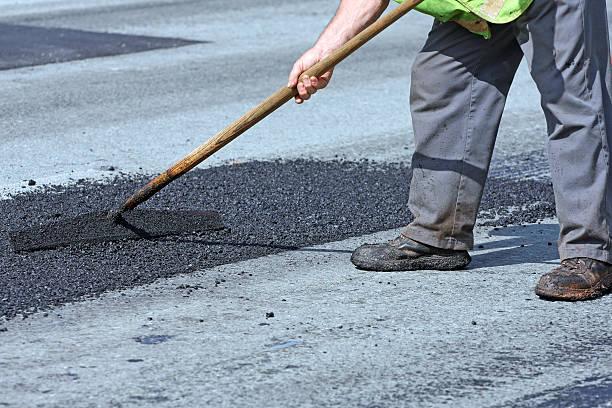
A real patch is a small repave inside a saw cut.
Pothole repair removes the failed section of asphalt, addresses the base underneath, and replaces the removed material with new hot or cold mix. The goal is a patch that holds for many years, not a shovel full that fails in a month.
The difference between a patch that lasts and one that does not is almost always base prep. If the base is wet or soft from the water that caused the pothole in the first place, dropping new asphalt on top just buys you a few months. We address the base.
Hot mix is the preferred material for permanent patches. Cold patch has a role for emergency fixes or small sites where getting a hot mix truck in is not practical.
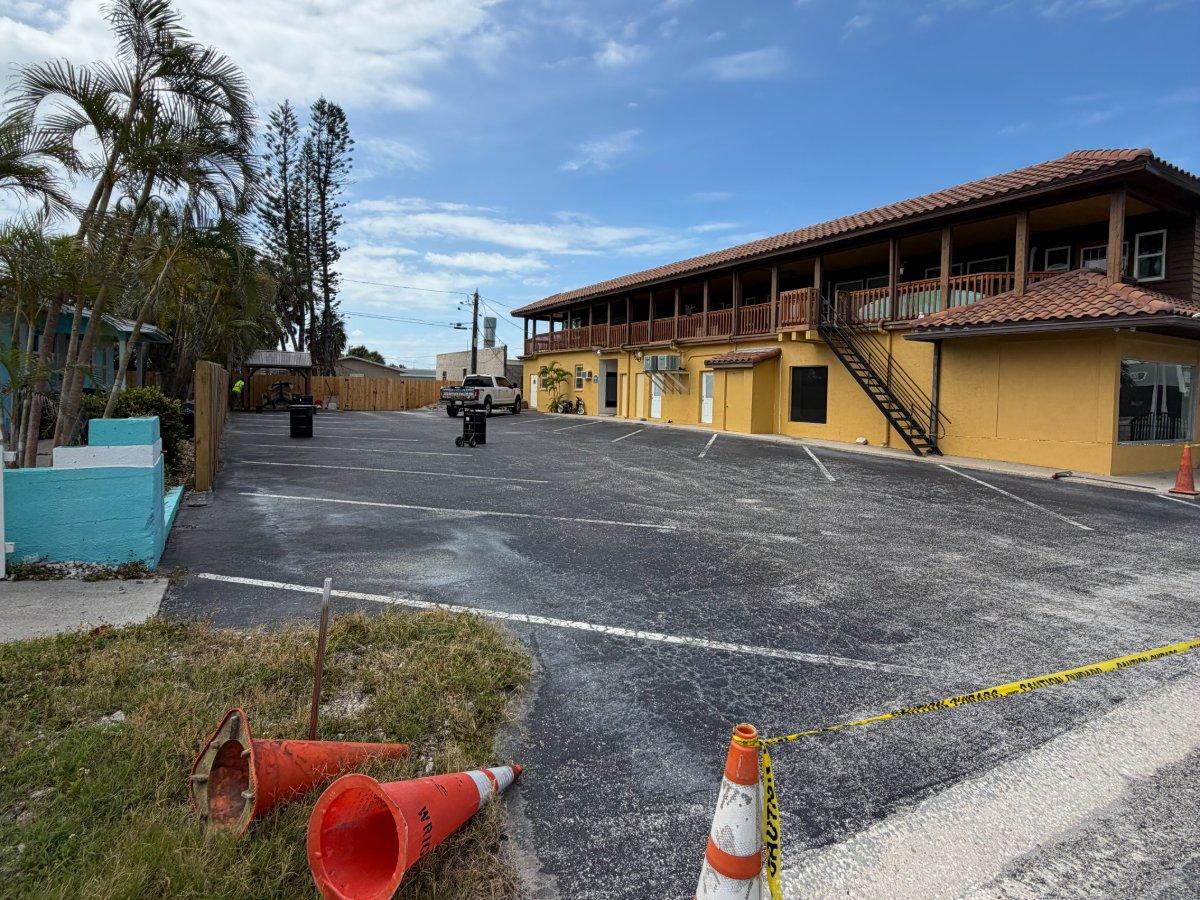
UV, heat, and rain are what break pavement here.
UV and heat weaken the binder
As binder weakens, the top layer breaks into small pieces and traffic lifts them out. A pothole almost always starts as a crack.
Rain carries fines out of the base
Water that gets through a crack to the base hollows it out, carrying small aggregate out at the edges. The surface above loses support and collapses.
Wet season compounds everything
Hurricane and storm season can double the size of a crack network in a single summer. A 6 inch hole in June routinely looks like a 2 to 3 foot patch by October.
How the job runs, start to finish.
One point of contact, clear scope, phased work so the lot stays usable where possible.
Site walk and photo map
We identify each pothole, measure it, note whether it is a surface failure or a base failure, and photograph for the quote and the record.
Saw cut
Cut a clean square or rectangle around the failed section into sound asphalt. Straight walls give the patch something to bond to.
Remove and inspect base
Remove debris. Test the base. If it is wet or soft, address drainage or add crushed aggregate and compact before any new asphalt goes in.
Tack coat the vertical edges
A tack coat on the saw cut walls bonds new asphalt to existing. Skip this step and the patch has a hairline seam that fails in one winter.
Place and compact in lifts
Hot mix where available, cold patch where it is not. Place in lifts and compact each lift for density. A dense patch is a patch that holds.
Edge seal and restripe
Seal the perimeter joint and restripe any stall lines or arrows that were affected. The next sealcoat ties the patch visually into the lot.
Catch potholes early.
Potholes compound fast once water is in the base. A quarterly walk through the lot, especially right after major storms, is the right cadence to catch them while they are cheap.
A 6 inch pothole left for one Tampa Bay wet season commonly turns into a 2 to 3 foot patch. The size of the repair, and the cost, scales hard with how long you wait.
Every lot is quoted individually.
- Number and size of potholesThe number of patches and the square footage of each are the biggest drivers. Many small patches cost more per square foot than one large patch.
- Hot mix vs. cold patchHot mix is the permanent repair and is priced differently from a cold patch. Cold is a short term fix with lower cost and shorter life.
- Base conditionsA dry, firm base under the failure is the ideal case. Wet or soft base means extra prep, drainage work, or crushed aggregate.
- Access and traffic controlOpen lots patch faster than active anchor tenant plazas where every patch has to be phased around deliveries and customer traffic.
- Restripe over the patchNot automatic. We flag any paint affected by the patch and quote it separately so it is clear.
No dollar amounts shown without seeing the lot. Send a few details and you will have a written, itemized quote within one business day.
Commercial properties across Tampa Bay.
If someone has to park on it, drive on it, or inspect it, we can quote it.
- Property managers
- Retail centers
- Office parks
- HOAs
- Multifamily communities
- Churches
- Schools
- Industrial yards
- Fleet yards
What property managers ask us most.
Hot mix or cold patch?
How long will the patch last?
Can you do it without closing the lot?
Why did the patch from another company fail in a few months?
Is restriping included in the patch price?
Will the patch be flush with the rest of the lot?
Can we wait on potholes?
Related services on your lot.
Asphalt Crack Filling
Fill cracks before they turn into potholes. The highest return maintenance step on commercial asphalt.
See this serviceParking Lot Sealcoating
Seal after patching to protect the repair and tie the visual appearance back together.
See this serviceParking Lot Striping
Restripe over any larger patch so stall counts and traffic markings stay correct.
See this serviceHave a property that needs attention?
Send a few details and we will return a written, itemized quote within one business day.